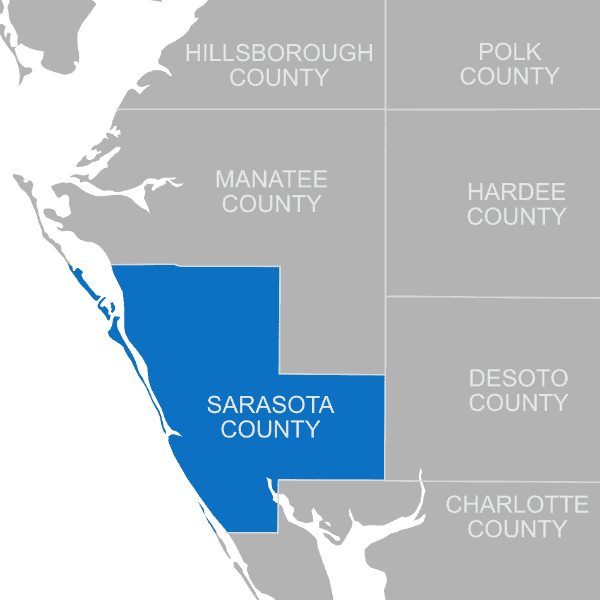
The Sarasota housing market makes much more sense when you stop thinking of it as a single market.
Downtown is primarily a condominium environment. Buyers can choose among older buildings, luxury towers, newer construction and mixed-use developments, with major differences in amenities, views, parking, building age and monthly fees. A downtown condo can significantly reduce the need to drive for dining and entertainment, but buyers need to evaluate more than the unit itself.
Condominium association finances, reserves, insurance, recent engineering work, planned projects and potential assessments can materially change the cost of ownership. Two similarly priced condos can have very different financial profiles once those factors are considered.
Outside downtown, Sarasota has a deep inventory of established single-family neighborhoods.
Some contain older homes on traditional city lots beneath mature tree canopies. Others have seen substantial renovation and redevelopment, creating streets where original homes sit near major remodels or newer custom construction. Areas closer to Sarasota Bay can include luxury homes and waterfront properties, while neighborhoods farther inland may offer buyers more house or land for the money.
Architecture varies considerably. Depending on the neighborhood, buyers may encounter historic homes, mid-century Florida houses, ranch homes, contemporary infill construction, luxury custom homes, villas, townhomes and condominiums.
For some buyers, that variety is more appealing than a master-planned community where housing tends to be newer and more consistent. For others, it creates more homework.
The listing photos only tell part of the story.
With older Sarasota homes, buyers may need to pay particular attention to roof age, plumbing, electrical systems, windows, previous renovations and insurance eligibility. Near Sarasota Bay and other low-lying areas, flood exposure and elevation can become important pieces of the ownership-cost equation. Waterfront buyers may have additional questions involving seawalls, docks, water depth and boating access.
Zoning also deserves attention when a buyer has plans beyond simply occupying the home. The City of Sarasota uses residential, commercial, office, industrial and mixed-use zoning districts, along with overlays and other property-specific regulations. Buyers considering redevelopment, additions, rental use or other changes should verify what is permitted for the individual parcel rather than assuming neighboring properties establish what can be done.
New construction creates another choice. Buyers who love an established neighborhood may occasionally find a newly built home inserted into an older streetscape. That can provide newer construction standards and modern design without moving to a suburban development, although the surrounding neighborhood will not necessarily have the visual consistency of a new master-planned community.
There is no universally “best” housing type in Sarasota. The better question is which set of tradeoffs fits the way you want to live.