Highlights
-
Central Manatee & Bradenton tightened mainly through a substantial inventory reduction.
-
Both price measures moved lower, limiting the case for stronger asking prices.
-
Supply moved closer to the countywide reading as buyer choice narrowed.
-
Marketing time shortened even though completed sales declined.
-
Sellers faced less competition, while buyers still needed to distinguish local pricing from countywide gains.
Market Conditions
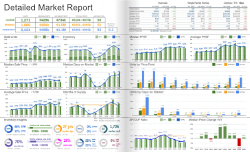
Central Manatee & Bradenton moved toward balanced-to-seller-leaning conditions in September 2026. This HLA, south of the Manatee River between 26th Street West and I-75, is distinct from Bradenton city. Its 3.8 months of supply was close to the county reading, but lower prices and closings kept the improvement measured.
The figures combine single-family homes, condos, townhomes, and villas, with year-over-year comparisons to September 2025.
The local supply reading compares with 3.5 months in Manatee County.
Pricing Trends
The median sale price declined 9.3%, from $375,000 to $340,000. The average declined 6.7%, from $420,000 to $392,000. The median marks the midpoint of sales; the average gives expensive transactions more influence.
The median declined 9.3%, and the average fell 6.7%, contrasting with the county’s increases in both measures. Completed sales shifted toward a lower-priced distribution. Sales mix may contribute, so the declines should not be interpreted as a uniform loss in the value of the same homes.
Inventory Trends
Available inventory declined 23.6%, from 793 to 606 properties. Months of supply declined from 5.0 to 3.8.
The reduction of 187 listings cut sellers’ competition more sharply than the countywide inventory decline. Current supply was above September 2019’s 2.8 months and September 2021’s 0.8 months. The segment tightened from last year while remaining outside an extreme shortage.
Market Pace
Closed sales declined 8.2%, from 147 to 135. Median days on market fell from 59 to 44 days. Closed sales measure completed transactions rather than new contracts.
The 44-day median was nine days shorter than the county’s 53 days and improved 15 days year over year. Closings declined 8.2%, so faster marketing did not accompany higher completed volume. The result shows a quicker completed-sale pace within a smaller set of transactions.
What This Means for Buyers
Buyers have fewer local alternatives and a shorter typical selling period to consider. Use comparable HLA sales rather than countywide price gains to guide offers. Lower median and average prices create a different pricing context, but they do not establish a matching discount for every property.
What This Means for Sellers
Sellers compete against substantially fewer listings and benefit from faster marketing time. Both lower price measures and fewer closings argue for disciplined asking prices. Prepare the property carefully and compare recent local sales, keeping Bradenton city statistics separate from this broader HLA.