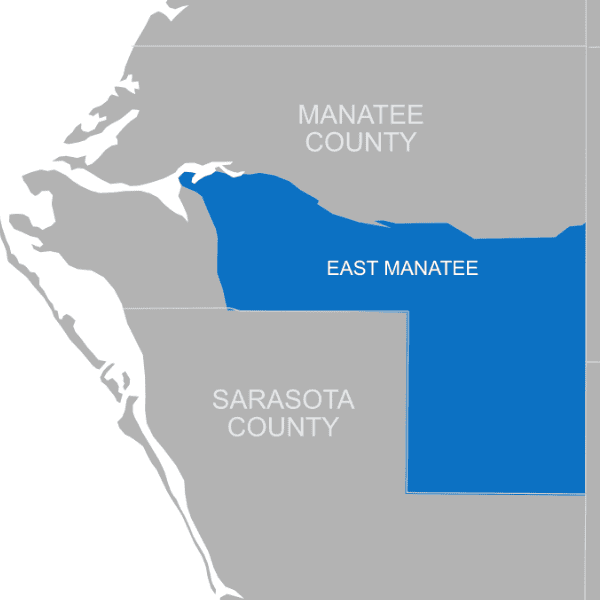
Housing in East Manatee is unusually diverse because the area combines major master-planned development with older neighborhoods and rural land.
Newer single-family homes are a major part of the market, particularly around Lakewood Ranch and the SR 64 and SR 70 corridors. Depending on the community, buyers may find homes ranging from relatively compact properties designed around shared amenities to larger residences in gated, golf, or luxury neighborhoods.
Villas, townhomes, condominiums, and multifamily options add another layer. These can appeal to buyers who want less exterior maintenance or prefer to exchange private yard space for community amenities and a more lock-and-leave ownership experience.
Lakewood Ranch itself illustrates how much variation can exist within one master-planned community. Its villages include different builders, home styles, price points, amenity packages, and stages of development. Some emphasize golf. Some emphasize active-adult living. Others are designed around parks, trails, clubhouses, pools, or proximity to town centers. The current community map shows both established villages and areas that remain under active development.
That means buyers should resist treating "Lakewood Ranch" as though it were a single housing product.
Two homes with similar square footage can carry very different ownership costs and lifestyles depending on their community. HOA fees, Community Development District obligations, golf or club memberships, maintenance responsibilities, amenity structures, and community rules can all affect the real cost of ownership.
The listing price only tells part of the story.
New construction creates another important dynamic in East Manatee. Buyers considering a resale home may also be competing with builders offering brand-new homes nearby. That can affect both negotiations and future resale, particularly in communities where builders still have substantial inventory or additional phases planned.
At the same time, resale homes may offer advantages that are easy to overlook. Established landscaping, completed pools, window treatments, upgraded lighting, mature neighborhoods, and improvements made by previous owners can represent substantial value compared with starting from a builder's base price and adding those items afterward.
Buyers comparing new construction with resale should therefore compare the finished cost of the home they actually want, not simply the advertised starting price.
Beyond the Master-Planned Communities
Travel farther from the major development corridors and a different housing market emerges.
Larger homesites and acreage become increasingly relevant. Depending on the property, buyers may encounter private wells, septic systems, agricultural uses, barns, workshops, fencing, private roads, or other characteristics uncommon in a conventional subdivision.
These properties require a different kind of due diligence.
A buyer interested in acreage should understand how the land can actually be used, not merely how many acres appear in the listing. Wetlands, drainage, access, zoning, easements, environmental considerations, existing structures, well and septic conditions, and the amount of usable land may all influence whether a property works for its intended purpose.
Someone who wants five acres because they dislike close neighbors has a different set of questions from someone who wants five acres for horses, a workshop, agricultural use, or future development.
That distinction matters.
HOA, CDD and Ownership Considerations
Community expenses deserve particular attention when comparing East Manatee homes.
Many planned communities have homeowners associations, and some properties may also have Community Development District assessments or other recurring obligations. The amounts and structures vary by community and property, so buyers should verify the current fees rather than assuming that neighboring developments carry similar costs.
The useful question is not simply, "Does this home have an HOA?"
It is, "What am I paying for, and is that valuable to me?"
A higher-fee community may include extensive landscaping, gates, pools, fitness facilities, clubhouses, recreational programming, or other services a buyer would otherwise pay for separately. Another buyer may rarely use those amenities and prefer a neighborhood with fewer shared expenses.
Golf communities deserve the same scrutiny. Golf access, membership requirements, club structures, and associated costs vary. Buyers who consider golf essential may see those expenses as part of the lifestyle they are intentionally purchasing. Buyers who simply like the appearance of a golf-course community should understand the financial structure before deciding whether it makes sense.
Rental restrictions also vary. Lakewood Ranch notes that rental policies differ among its villages, with some having minimum rental periods longer than others. Investors and buyers who expect to rent a property seasonally or during extended travel should verify the rules for the specific home rather than relying on general assumptions about the area.
Insurance and flood considerations are similarly property-specific. Inland does not automatically mean free from flood exposure, and construction age, roof condition, elevation, location, and other property characteristics can affect insurance options and costs. Buyers should evaluate the individual property rather than applying a single rule to East Manatee as a whole.
Growth and New Development
Growth is one of the defining forces in East Manatee.
Manatee County planning documents have long identified the area east of I-75, including Lakewood Ranch, as a major residential growth area. County transportation planning has also noted substantial increases in residential permitting and the challenges of serving lower-density development with transportation infrastructure.
For buyers, growth has two sides.
New development can bring more shopping, restaurants, medical services, parks, road connections, and housing choices. Areas that once felt far removed from daily conveniences can become much easier places to live.
But buying in the path of growth also means today's surroundings may not be tomorrow's surroundings.
An empty parcel across the road is not necessarily permanent open space. A quiet road may carry more traffic as additional neighborhoods are completed. Construction can continue for years around expanding master-planned communities.
Buyers who place a premium on a particular view, traffic pattern, or sense of privacy should investigate nearby land uses and planned development rather than assuming the current landscape will remain unchanged.
Conversely, buyers who prefer a mature, finished environment may want to concentrate on established sections of East Manatee rather than the newest edges of development.