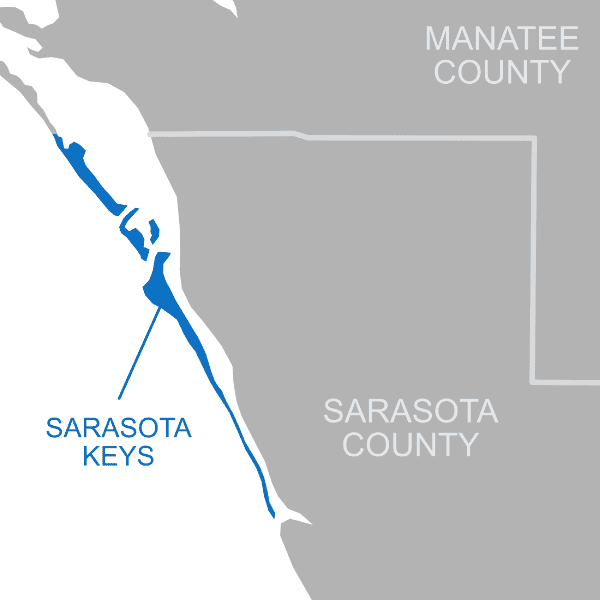
The Sarasota Keys include some of Sarasota County's most valuable real estate, but “luxury” does not adequately describe how varied the housing is.
A buyer may encounter an older condominium directly across from the Gulf, a renovated mid-century home, a new contemporary residence, a canal property with a dock, a bayfront estate, or a Gulf-front home where the land itself represents a substantial portion of the property's value.
Condos are particularly important on Lido Key, Siesta Key, and Longboat Key. They can offer a simpler path to beach living, especially for seasonal residents or owners who do not want responsibility for maintaining a waterfront single-family property. But condo buying requires its own due diligence. Association finances, reserves, insurance, assessments, building condition, maintenance history, rental policies, and planned capital projects can materially change the cost and risk of ownership. Two units with similar views and asking prices can represent very different financial propositions once the health of their associations is considered.
Waterfront homes appear throughout the Sarasota Keys, but even the word waterfront needs interpretation. Gulf-front property is different from bayfront property. Bayfront is different from canal-front. A beautiful dock does not automatically mean a particular boat can comfortably reach open water.
Buyers considering boating should investigate water depth, tidal conditions where relevant, bridges, dock configuration, lifts, seawalls, permitting, and the practical route to the Gulf or bay.
A Bird Key canal home, Siesta Key canal property, Longboat bayfront residence, and Casey Key Gulf estate may all qualify as waterfront real estate while serving completely different buyers.
Much of Sarasota's island development occurred decades ago, so older homes are common alongside extensive renovations, replacement homes, and newer luxury construction. That creates opportunity, but it also makes effective age important. A beautifully renovated older house may have newer finishes while retaining older infrastructure. Conversely, some buyers specifically seek older properties because of lot size, location, architecture, or redevelopment potential.
When comparing properties, look beyond the year built and examine what has actually been replaced or upgraded.
Flood, Wind, and Insurance Considerations
Coastal ownership comes with additional variables. Flood exposure can vary by property, elevation, and location. Wind coverage, flood insurance, building characteristics, roof age, openings, elevation, and prior improvements can all affect the cost of ownership.
Waterfront buyers may also need to evaluate seawalls, docks, shoreline conditions, and other improvements that a mainland buyer would never encounter. These are not reasons to avoid coastal property. They are reasons to understand the true carrying cost of the specific property before comparing it with another home based only on purchase price.
Rental Rules Matter
Rental policies can vary substantially among municipalities, condominium associations, homeowners associations, and individual properties. That matters even for buyers who do not initially plan to rent.
Rental flexibility may affect future income options, resale demand, financing considerations, and the atmosphere surrounding a property. A building with significant short-term occupancy can feel very different from one designed primarily around full-time and seasonal residents.
Buyers should verify current regulations and association rules for the specific property rather than assuming that rules elsewhere on the same key apply.